92 stories
·
2 followers

Goodbye Metafilter

2 Comments

Metafilter logo After 24 years I’ve (mostly) quit visiting the community website Metafilter. It has been an important social space for me and I’ve made a few lifelong friends there. But it no longer feels like my place. I stopped visiting for a couple of weeks and didn’t miss it, so now it’s off my daily rotation. I used to spend an hour a day there!

At its best Metafilter was truly Best of the Web. It’s a very old fashioned site, born out of the late 90s / early 2000s when the Internet seemed new and exciting and there were a bunch of interesting folks building early websites and Internet products. Metafilter was the community watercooler where people shared links and thoughts about interesting things.

It’s still that. But the Internet has changed, it no longer feels like a fun experimental medium. And we’re all awash in zillions of ways to discover new things on the Internet. Metafilter does still surface interesting stuff no one else does. But less often than it used to. Also the community itself is dwindling, the traffic stats are the story of a community aging in place. I am impressed it is surviving the transition to a community-managed non-profit, maybe that will make room for some new blood.

What really turned me off is a change in the discussions, or maybe a change in me. There’s a pretty strong political and cultural orthodoxy. Some of it is great, like not accepting racism or sexism or anti-LGBT sentiments. Some of it is foolish, like a kneejerk “all capitalism is terrible” stance that annoys me for its thoughtlessness more than its doctrine. What turned me off recently is a strident anti-AI voice that makes it impossible to have an insightful discussion about the most transformational technology of the decade. Overall I just found myself getting more annoyed than informed by the discussions, so it was time to go.

These days I mostly find out about interesting new things on Reddit, or more accurately a set of carefully chosen subreddits. Mastodon is my social media of choice. I also follow a few linkblogs which sometimes have delightful surprises.

Read the whole story
denismm
46 minutes ago
reply
There’s a lot of friction everywhere right now between the reasonable attitude of “LLMs are a scourge and supporters should be shot on sight” and the ALSO reasonable attitude of “LLMs are an amazing technology that is changing everything”. Sounds like this guy and MF ended up on opposite sides of it.
Share this story
Delete
1 public comment
sarcozona
11 hours ago
reply
Yeah, i left in 2022 or so and haven’t missed it
Epiphyte City

Machine Legible

2 Comments

I was reading Liz Pelly's book about Spotify (post upcoming) when I came across this paragraph, talking about how Spotify uses data to get artists to "optimize" their work.

The writer Rob Horning once argued in his newsletter that datafication, or the process of rendering our lives as data is "first and foremost... a kind of surveillance designed to impose classifications and norms on the surveilled while devaluing whatever ways they understand themselves." It's a way to encourage artists to minimize their own conception of their work, and maximize its machine-legibility.

I love a good word, and "machine legible" is a great word for what some folks have been trying to do to education for decades.

Think for instance of Common Core standards and its various replacements and/or assumed names-- these are best understood as a set of data tags that can be attached to every lesson plan, every assignment, every grade (especially if you're all in on proficiency-based standards), and every other piece of instructional content. What does all this tagging do other than render the whole educational program machine legible? All this standard tagging isn't necessarily useful for the humans, but it is great for the machines. 

Of course, if we're going to render education machine legible, that means we have to devalue and perhaps get rid of all the things that aren't easily read by the machines. So the kind of slow education approach that goes into a deliberate, thoughtful approach to reading and reflecting on an entire novel-- the machine can't really read that, so it falls by the wayside.

Writing used to be hard for the machine to read, but now that the machine can do generative AI-- well, human writing still isn't machine legible, but the machine can extrude enough noises that some folks can convince themselves that it's reading writing. Even though only the most superficial parts of word strings are legible to the machine; it cannot "read" what the words mean, but only compute the statistical picture of where they appear.  

The other part of Pelly's sentence is also important, the idea that eventually the artist blocks out their own ideas about their work and instead tries to create what the machine can best read. For "artists" we can substitute "teachers" or "writers" or "students." The whole of human experience is not legible to the machine, but the message from standards through scripted lessons through the Big Standardized Test is that, in schools, we should all chop the human experience down to only those parts that are machine legible. And as I have kvetched about endlessly, we have also as a society accepted the notion that what the machine can read is a fair and complete picture of "student achievement" and "school effectiveness." 

The machine's view of human life is tiny, meager, limited, like a cat with sunglasses trying to watch the world through a thin slit in its cardboard box. Shame on everyone who has convinced themselves that's a good enough view of the world and humanity because they have a lot of money riding on that cat. 

Rob Horning is a name I didn't know, but you can find him on Bluesky saying smart things like

all algorithmic media can be understood as a system for eliminating "the creators' ego of wanting to make good art"

He was previously the editor of Real Life and he substacks at Internal Exile. 

Meanwhile, there is an actual machinelegible.com. Right now it's all about exhorting merchants, telling them "your next customer might be a machine,' so you had better start optimizing your business to better serve its machine customers. They offer free audits. Great.

Read the whole story
denismm
5 days ago
reply
I’m reminded of how part of the shift from gathering to farming in the stone age was because it was easier for governments to tax people if they made something countable like grain.
Share this story
Delete
1 public comment
DGA51
5 days ago
reply
The machine's view of human life is tiny, meager, limited, like a cat with sunglasses trying to watch the world through a thin slit in its cardboard box.
Central Pennsyltucky

Wikipedia’s War on Neutrality

1 Comment and 2 Shares
A new history of the online encyclopedia ignores its well-documented progressive bias.

Read the whole story
denismm
5 days ago
reply
Saved you a click - she’s whining that this book doesn’t talk about the evils of Wikipedia such as “not considering the Daily Mail to be a reliable source” and “not trusting the ADL’s statements about the Gaza conflict”.
Share this story
Delete

AI Has a People Problem

1 Comment and 2 Shares

This page is based on my talk at Øredev in Malmö on 4 November 2026. You can see the slides here.

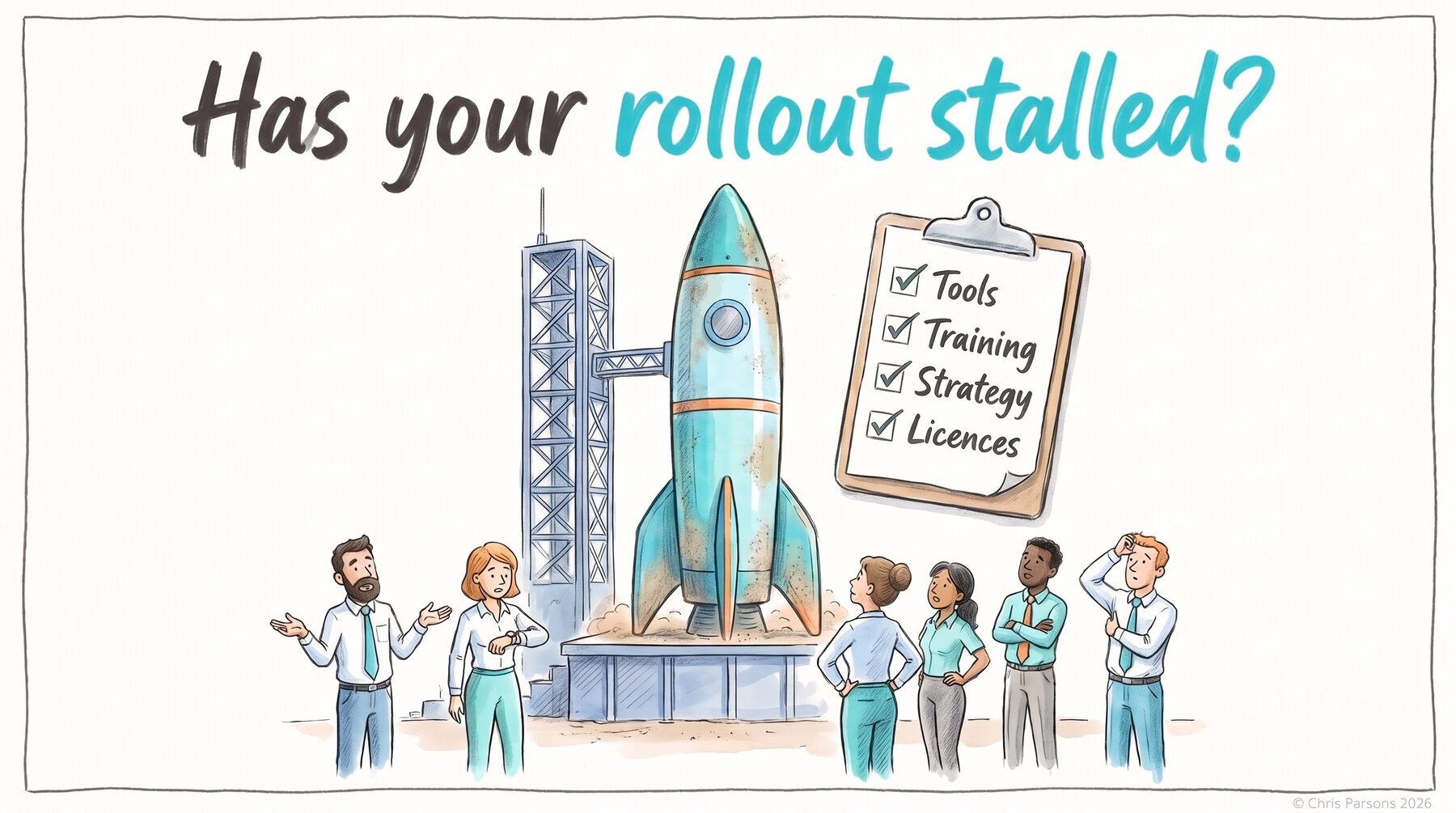
The AI tools work. People have been trained. The strategy has been signed off. Yet many rollouts stall when teams try to change how they actually work.

Slide: 'Has your rollout stalled?' A rocket sits on the launch pad with tools, training, strategy and licences all ticked off, while the people around it shrug.

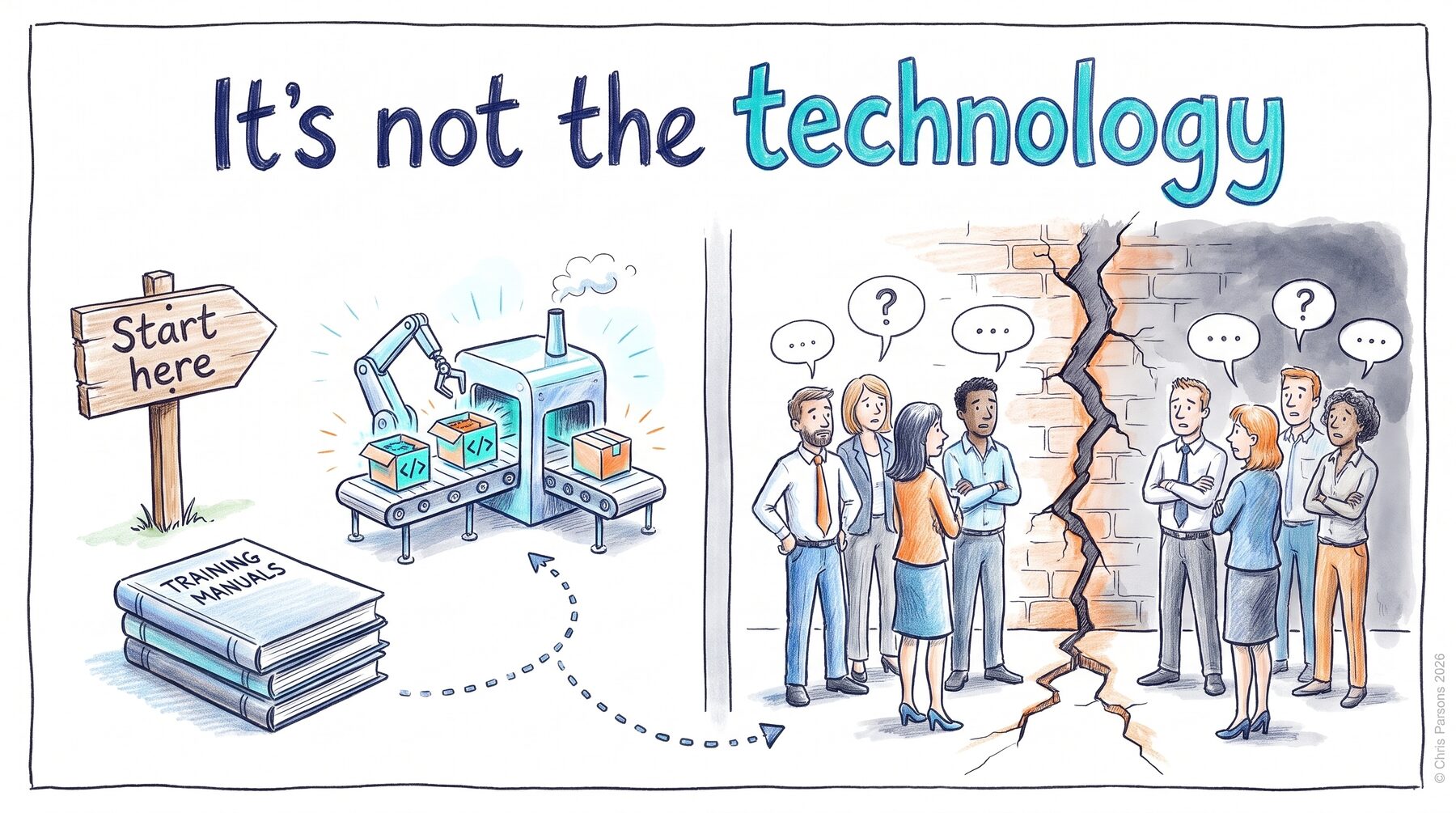
When I went back through my client conversations, the obstacles were rarely about whether the technology could do the job. They were about what the change meant for the people doing it.

This year’s Øredev theme was Legacy, and the legacy of this shift will be what happened to the people, not the code.

Slide: 'It's not the technology'. On one side, a signpost saying 'Start here' points at training manuals and a software factory; on the other, a crack runs through a wall between confused groups of people.

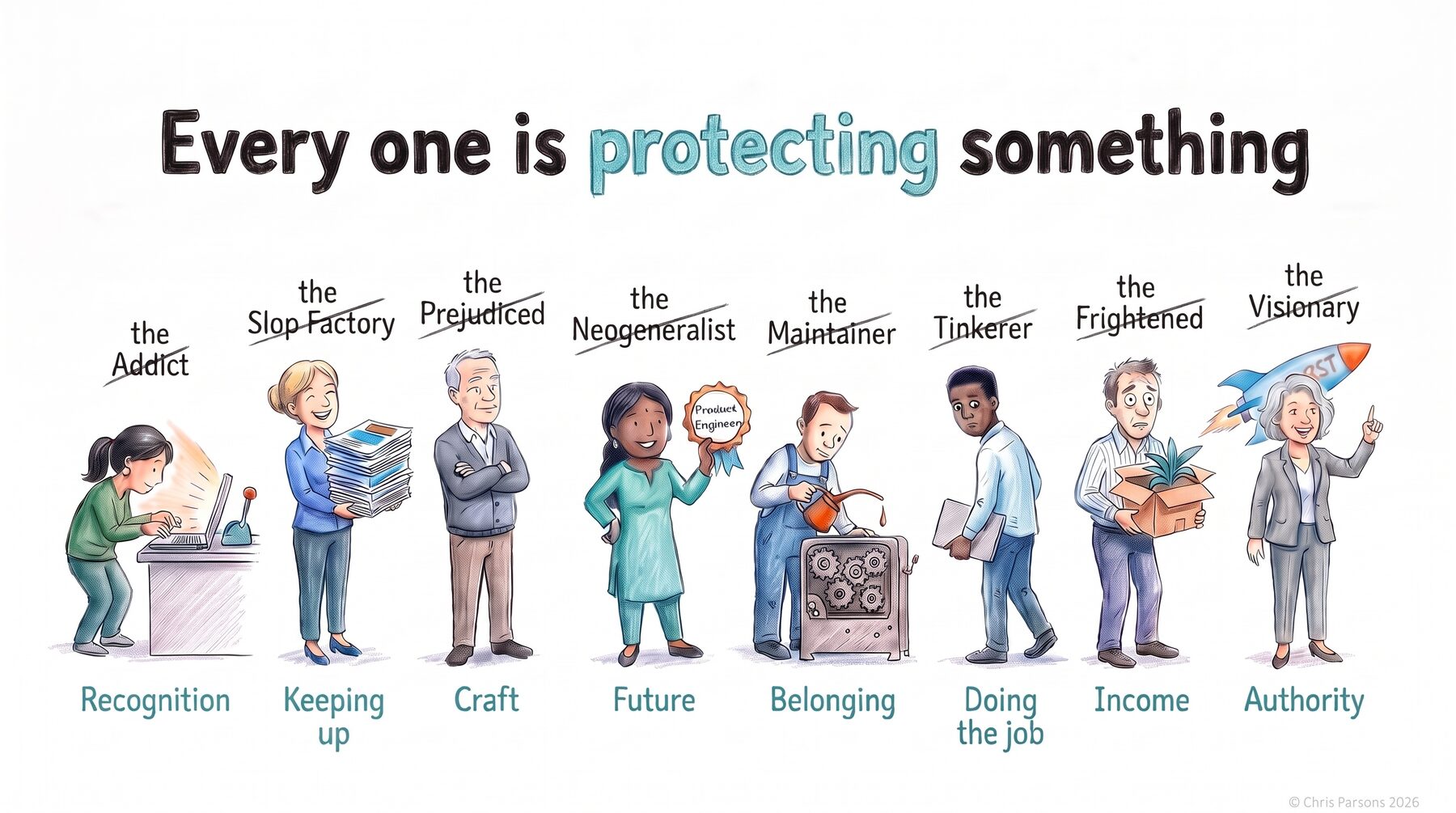
How someone reacts to AI does not tell you whether the tool is good. It tells you what that person is protecting. In the talk, I put eight faces to those reactions, each with the name we call them when we are frustrated. I have been some of them myself.

Eight people to notice

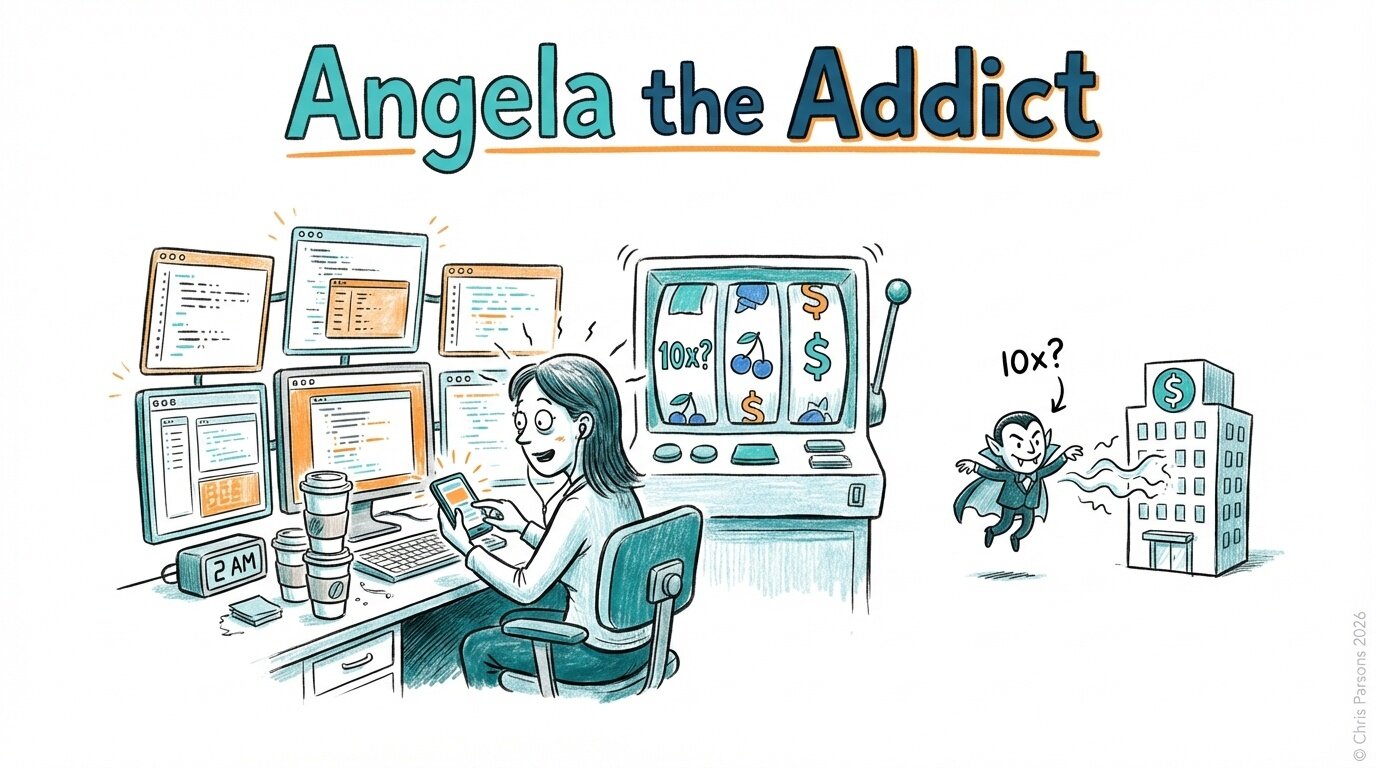
Slide: 'Angela the Addict'. A woman works across six screens at 2am, one of them a slot machine, while a little figure asking '10x?' flies off towards an office block.

Angela is burning out. She is one of your best people and cannot stop starting another AI session. I recognise this in myself: some mornings I have felt revulsion towards the tool, and by lunchtime I was back. Check on the health of the people producing the most, and agree what happens to the hours and the gains.

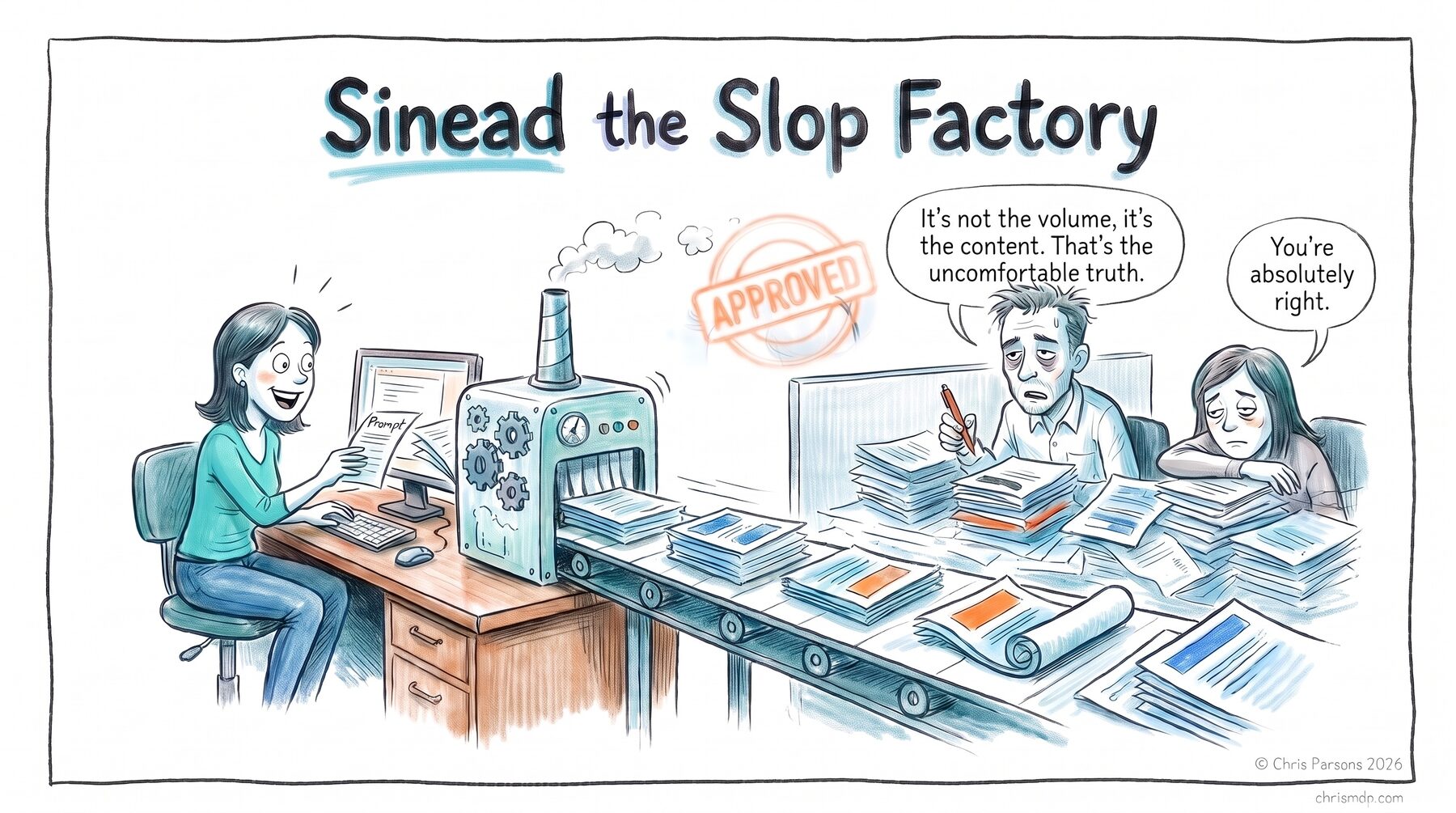
Slide: 'Sinead the Slop Factory'. A cheerful woman feeds a machine stamped 'Approved' that churns out documents, while her colleagues wade through the pile.

Sinead produces work others have to untangle. A polished document can hide a thought that was never worked through. Ask what its author thinks and how they reached that view. Whoever sends it must stand behind it. I have done this too, dictating a stream of consciousness and letting the AI polish it. The polish hid the gap from the reader, and from me.

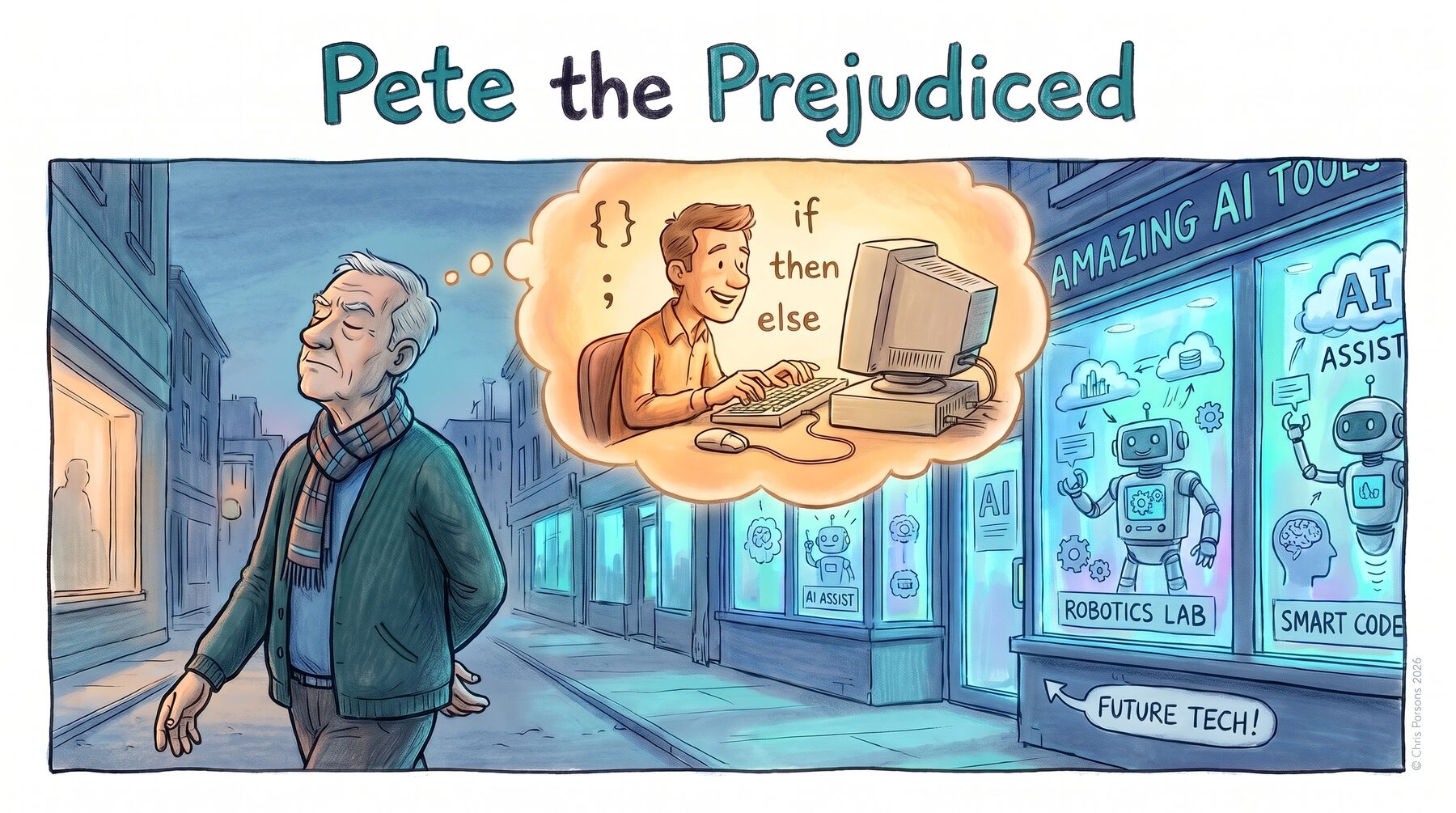
Slide: 'Pete the Prejudiced'. An older man walks past shop windows full of new AI tools, dreaming of himself writing if-then-else code at an old computer.

Pete made up his mind too early. He tried AI when it was worse, and he takes pride in the craft now changing. A new benchmark will not address that loss. Give him a peer he respects and a chance to try the tools on real work. The message is “the tools changed”, not “you were wrong”.

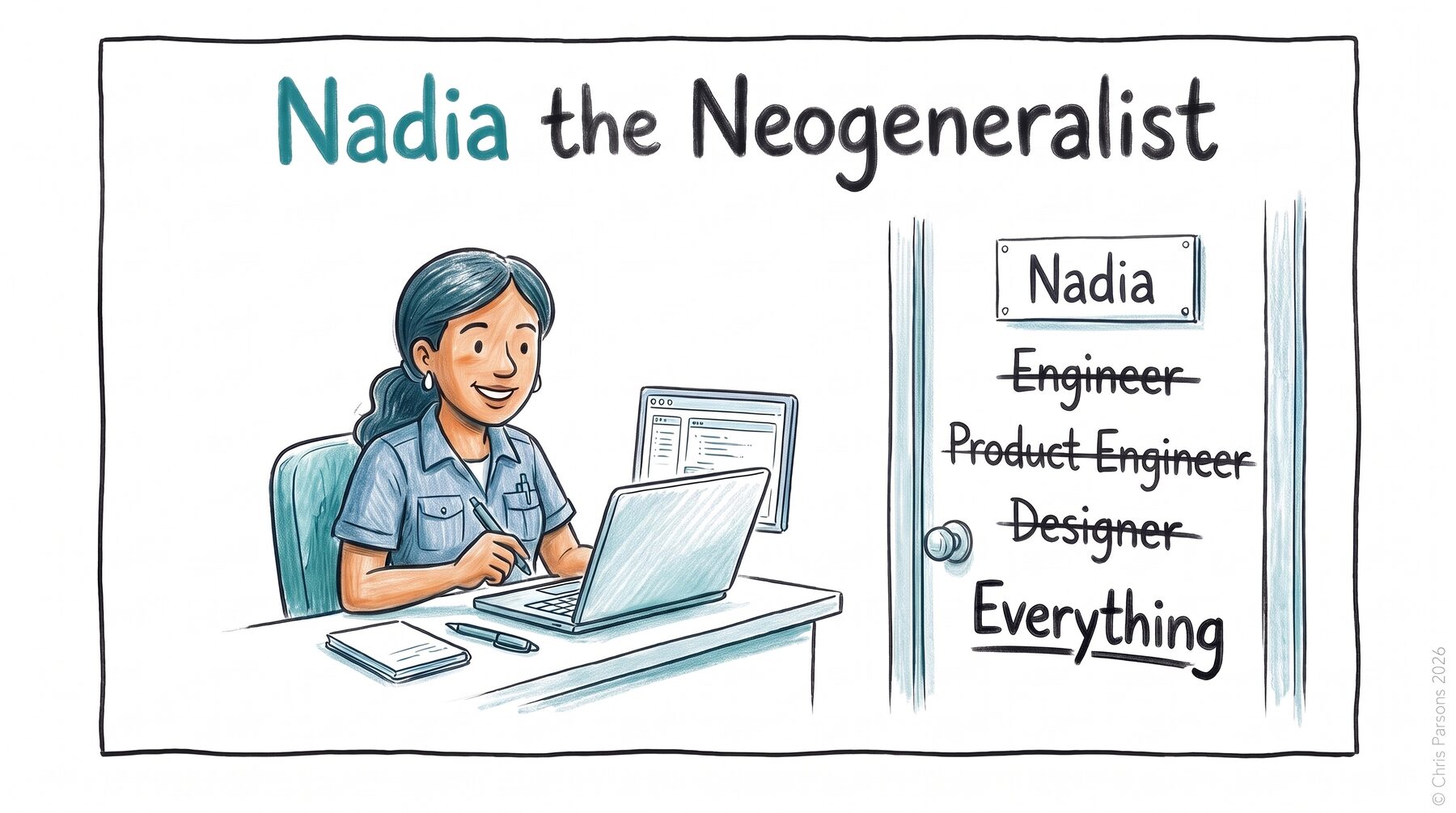
Slide: 'Nadia the Neogeneralist'. A woman at her laptop beside a name plate where Engineer, Product Engineer and Designer are crossed out and replaced with Everything.

Nadia wants a place in the work ahead. Engineers and product people are both reaching for broader roles, a little like jumping into the lifeboat. Help them learn from one another instead of treating the job title as the answer.

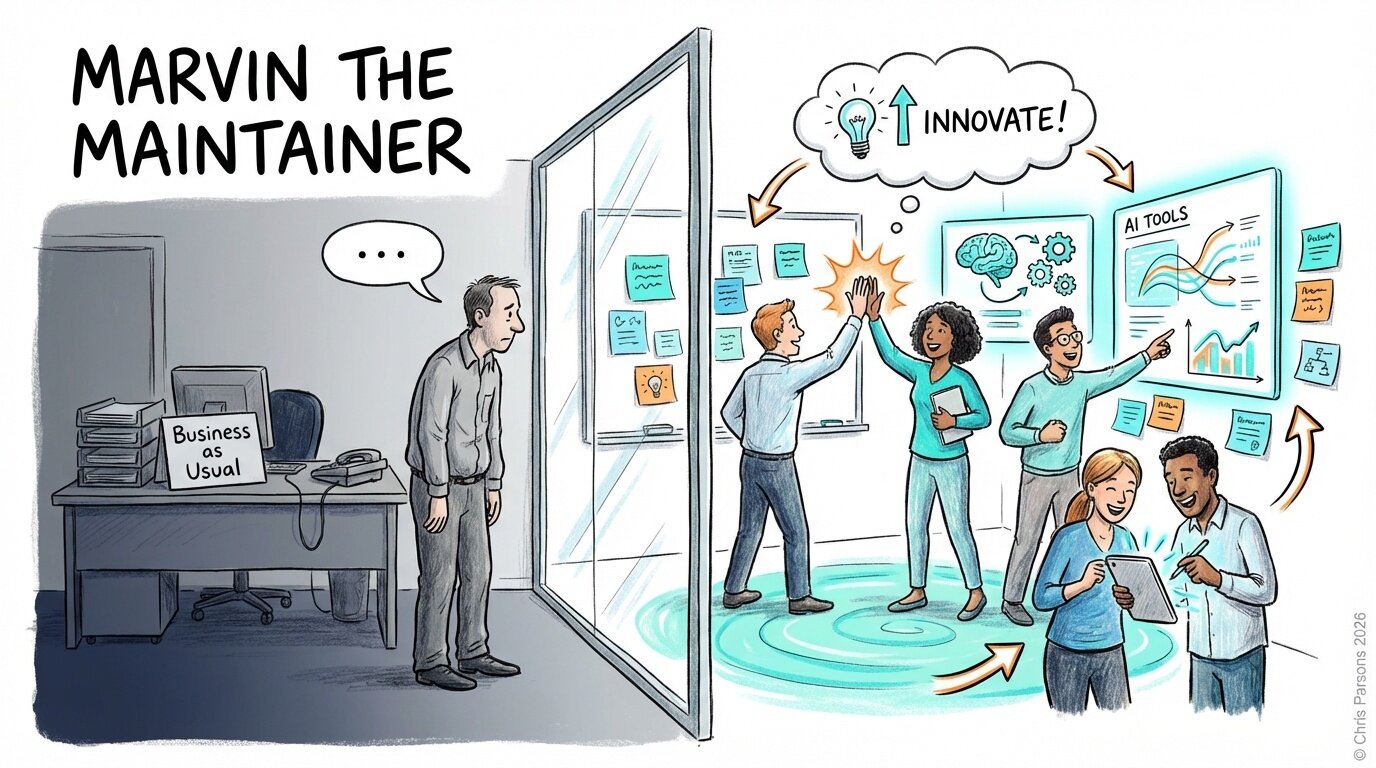
Slide: 'Marvin the Maintainer'. A man stands alone in a grey office marked 'Business as usual', looking through a glass door at a bright team celebrating with AI tools.

Marvin is keeping the old system running. The small AI team gets the time and attention while he keeps the lights on. Give every team people who can learn and teach, with protected time to do it. Feeling like the B team is a retention problem. In my client conversations, champion groups without protected time fizzled out.

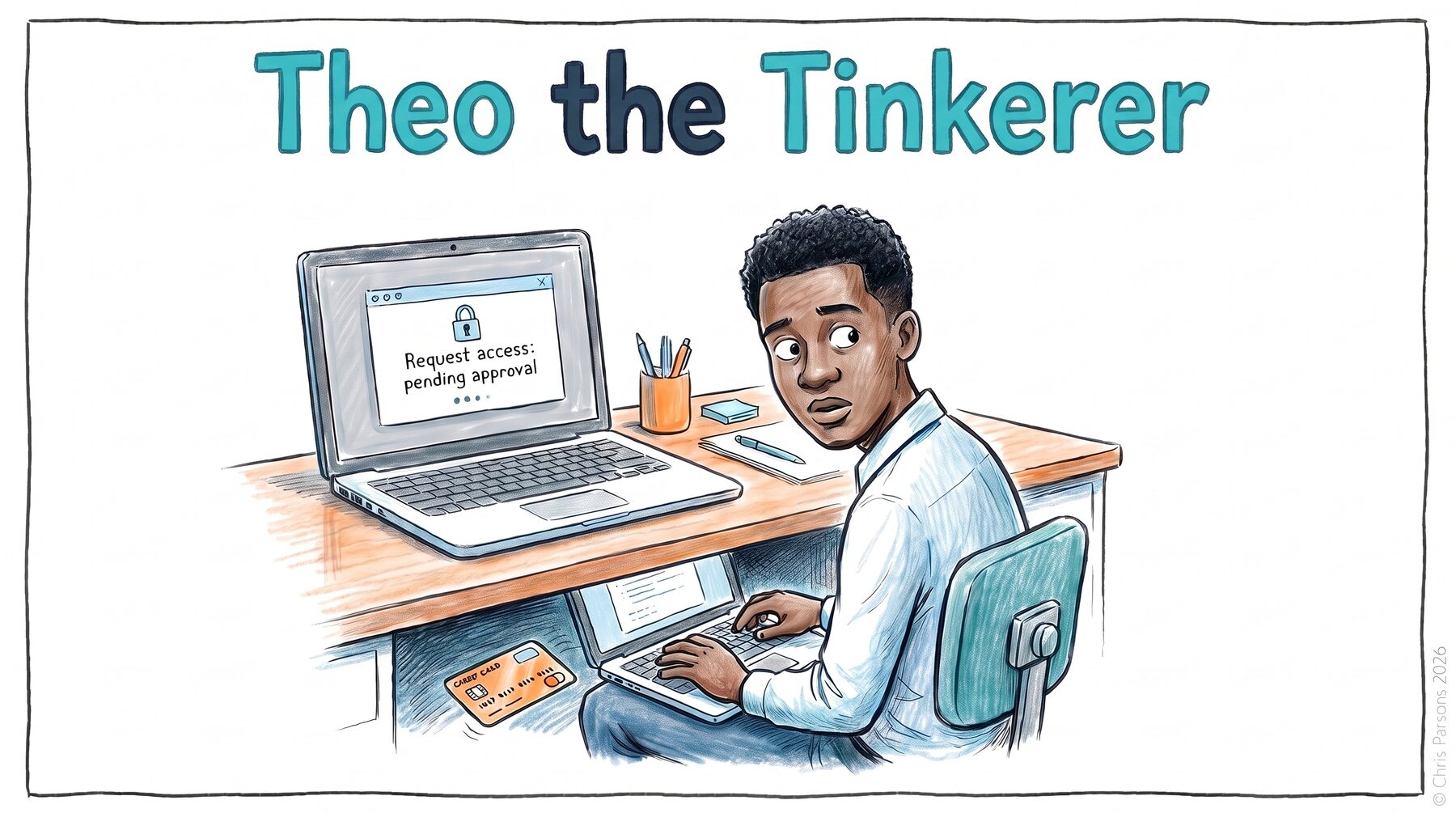
Slide: 'Theo the Tinkerer'. A man glances over his shoulder while his work laptop shows 'Request access: pending approval' and his own card sits by the keyboard.

Theo uses his own AI out of sight. If the approved tool is too hard to use, a ban may hide the work rather than stop it. Offer a safe tool that works, then invite people to show what they have built. As one person put it to me: “The moment we made people ask for permission, nobody asked.”

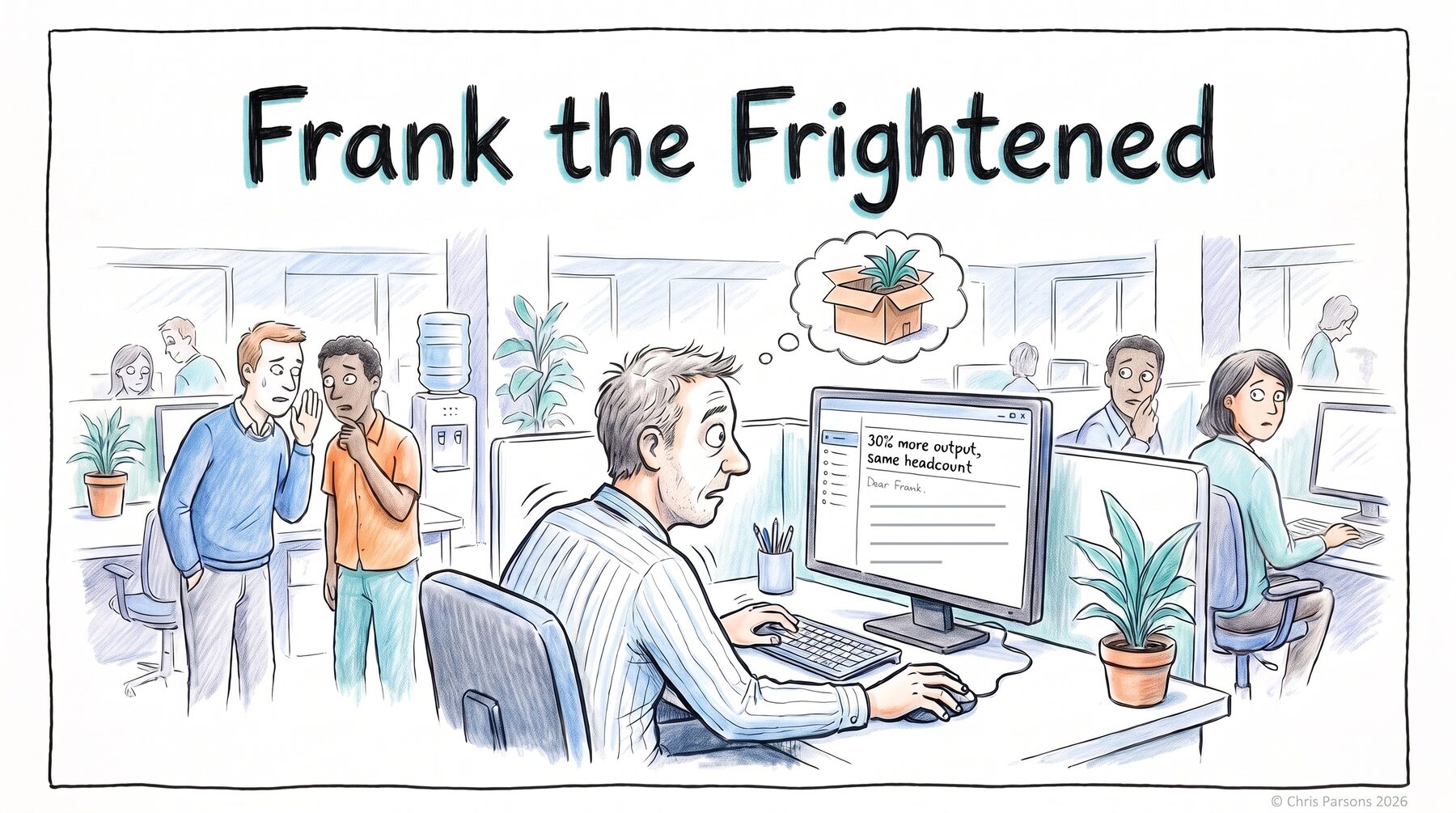
Slide: 'Frank the Frightened'. A worried man at his desk reads an announcement about 30% more output with the same headcount, while colleagues whisper behind him.

Frank hears a threat to his job. Productivity promises sound different to someone whose team has already faced cuts. Be honest about jobs. Measure teams rather than ranking individuals by AI output. If a cut is coming, make it once.

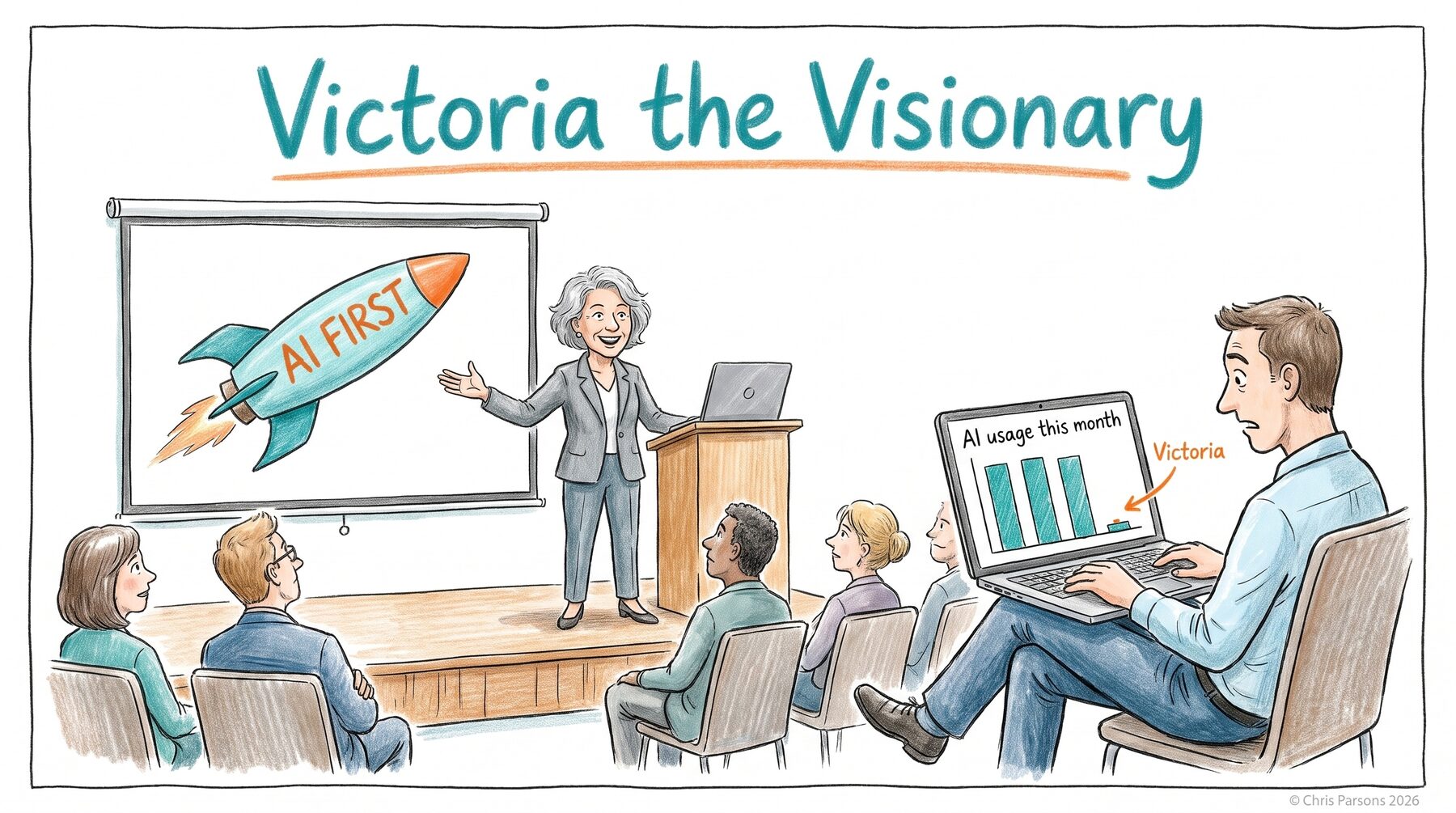
Slide: 'Victoria the Visionary'. A leader presents an 'AI first' rocket on stage, while in the audience a man's laptop shows her AI usage this month is the lowest bar.

Victoria sets the AI goal without using it herself. A leader cannot learn the limits of the tools from a dashboard, and admitting she has not used it can feel like losing authority. Use AI on your own real work before asking everybody else to change. I see some Victoria in all of us.

These are characters for discussion, not labels to pin on colleagues. The point is to find out what a person is protecting and what you can change for them.

Slide: 'Every one is protecting something'. The eight characters stand in a line, each labelled with what they protect: recognition, keeping up, craft, future, belonging, doing the job, income and authority.

Three things leaders can do

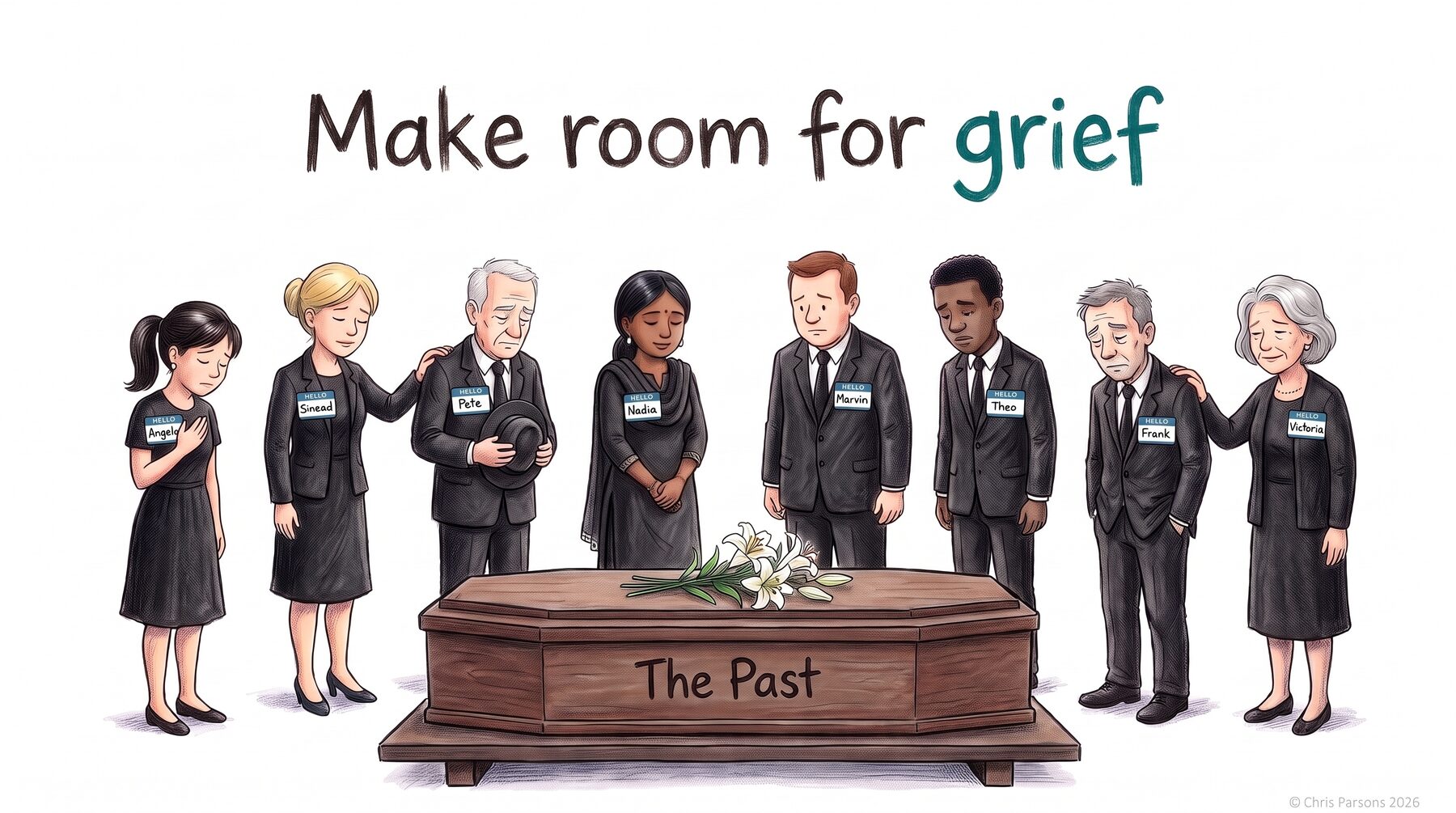
Slide: 'Make room for grief'. The eight characters stand in black around a coffin labelled 'The Past'.

Make room for grief. Work that gave someone pride may have changed underneath them. Listen to that before making the productivity case. Funerals are for the living, not the dead.

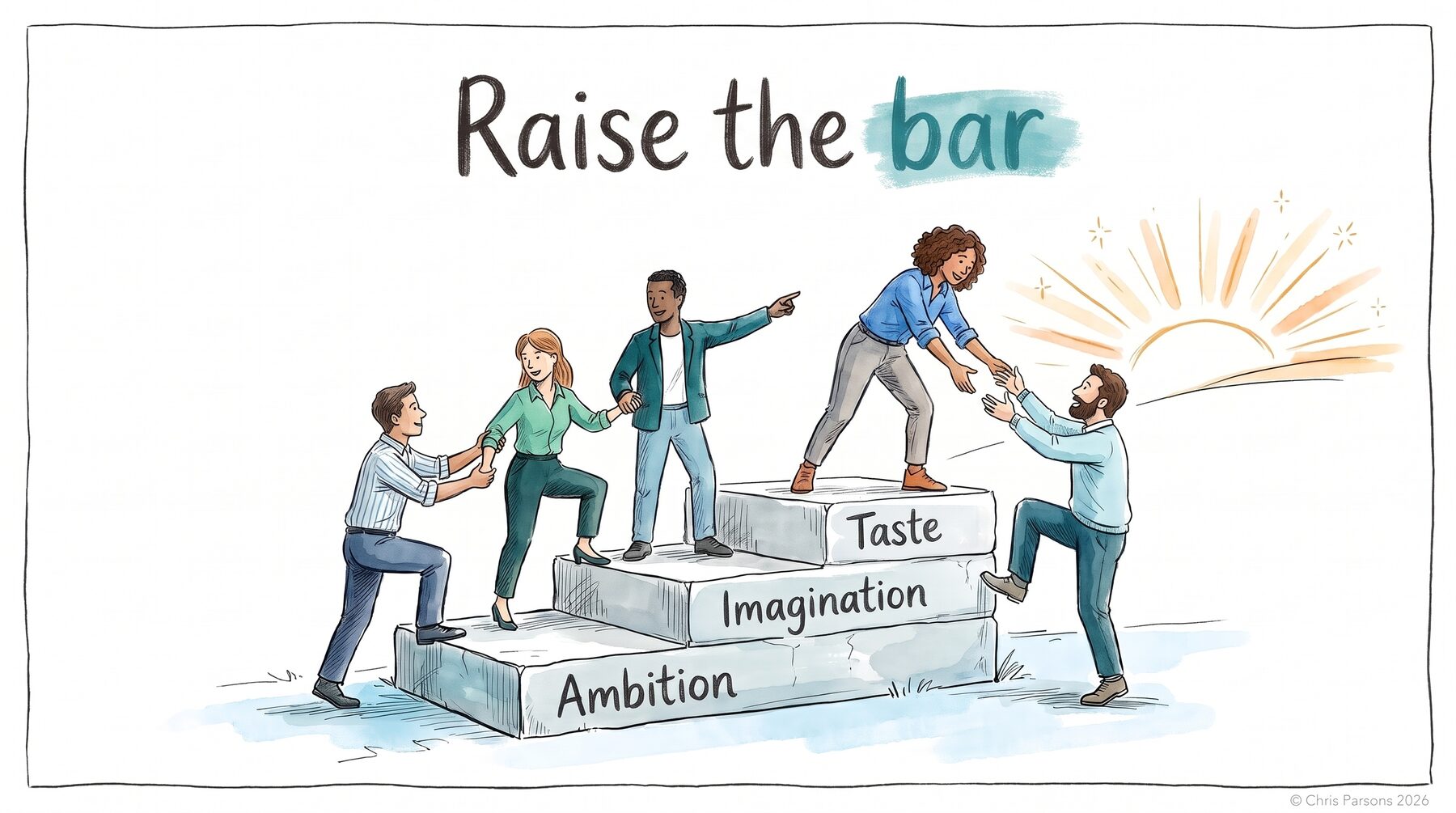
Slide: 'Raise the bar'. People help each other up steps labelled Ambition, Imagination and Taste towards a rising sun.

Raise the bar together. Help people build ambition, imagination and taste. Show each other what good work looks like now, including when to stop using AI. Angela does not need more ambition. She needs taste.

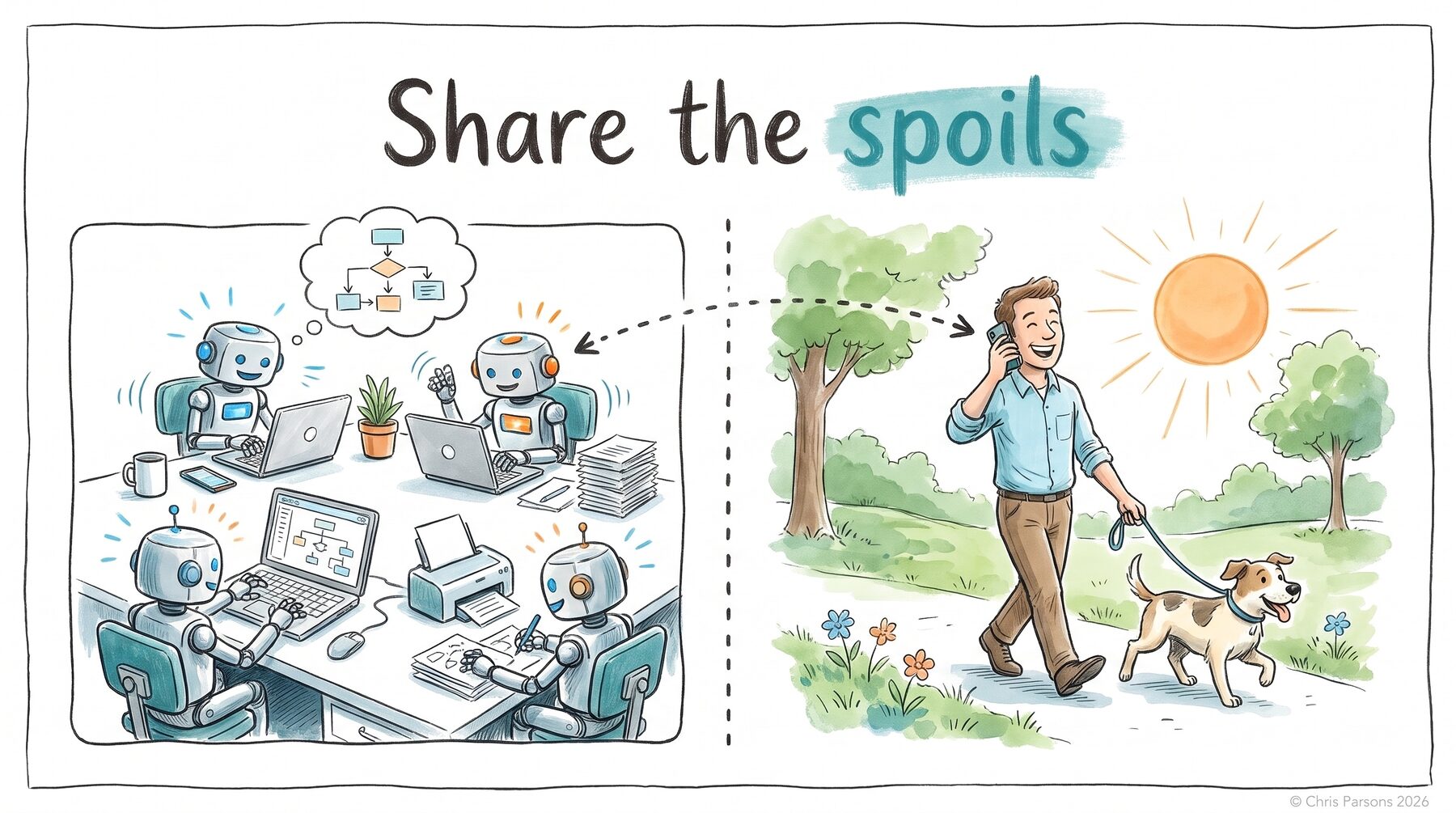
Slide: 'Share the spoils'. On one side, robots work at desks; on the other, a man walks his dog in the sunshine while talking to his agent on the phone.

Share the gains. If people can manage AI work without sitting at a desk all day, let the working arrangement change with the job. Do not ask the most enthusiastic people for more hours just because the tools allow it. In the industrial revolution, real wages barely moved for half a century while output per worker rose.1

I explored an earlier version of these people problems in a March webinar. That session had seven characters, several of whom return here. The Øredev talk revisits the idea with eight and puts the leadership response at its centre.

One thing to try

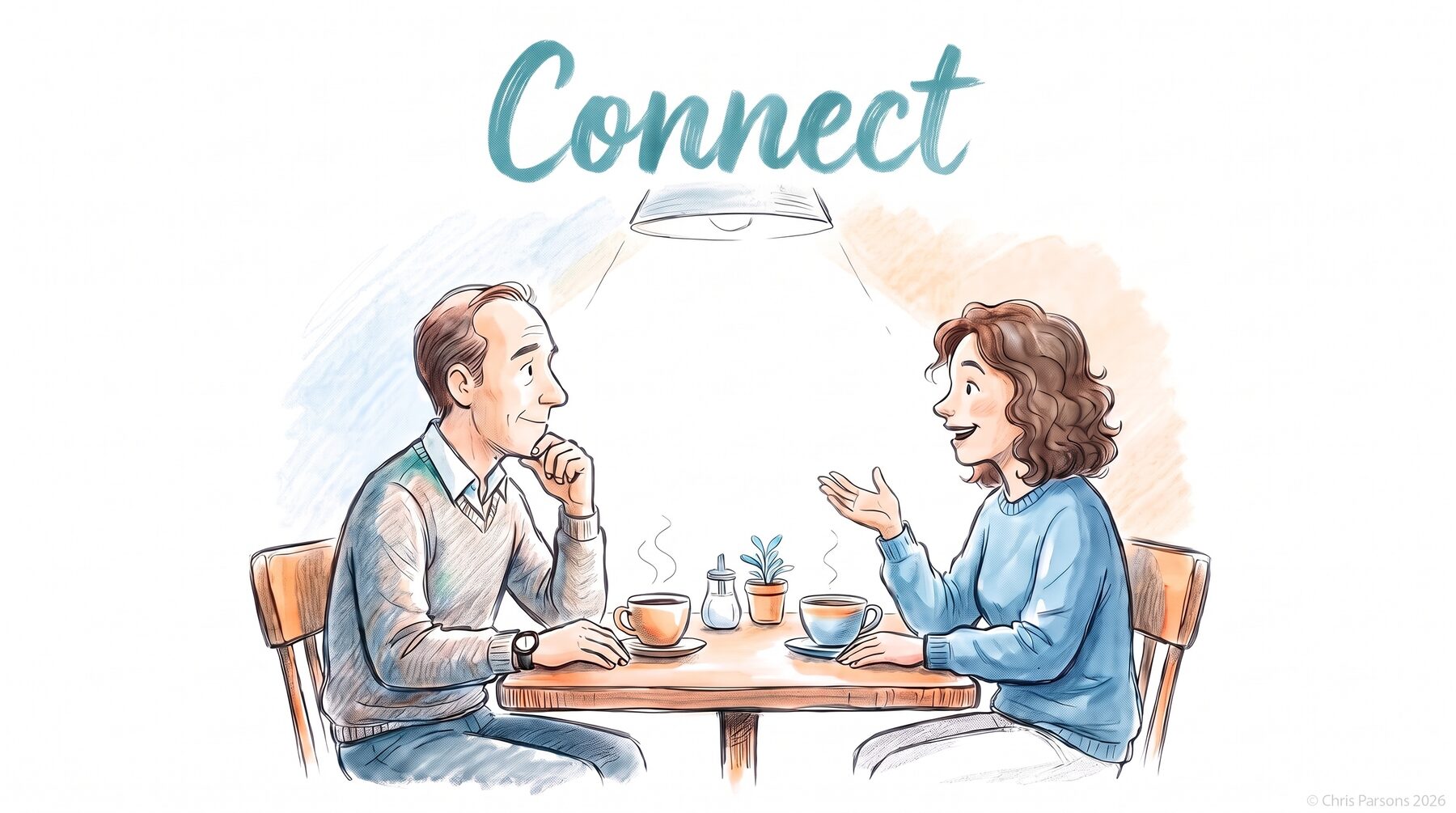
Talk to one person on your team this week. Ask how AI is changing their work, and listen for what they are trying to protect. The conversation is worth more than another usage chart. People crave connection, and it is the one thing AI cannot give them.

Slide: 'Connect'. Two people talk over coffee at a small café table.

With social media, the technology raced ahead and people were left to cope on their own. We already know that legacy. This time we get to choose AI’s.

Read the whole story
denismm
24 days ago
reply
Ellen the Ethical will have to be fired.
Share this story
Delete

AI Changed the Cost of Writing Code. It’s Time to Reestimate Legacy Modernization.

1 Comment and 2 Shares
An enterprise application has been running for 30 years. It still processes orders, calculates payments, or moves information between systems the business depends on. Everyone…
Read the whole story
denismm
32 days ago
reply
So you replace a system that nobody understands but it still runs, with a new system that nobody understands and probably still runs? I am skeptical :)
Share this story
Delete

Note on 18th September 2026

1 Comment and 2 Shares

Being a computer scientist who refuses to find anything about LLMs interesting right now is a bit like being a geneticist who refuses to find anything interesting about the recently opened Jurassic Park.

Skeptical geneticist: "pfft, it's just frog DNA. And they deliberately let them eat people for the marketing."

Tags: llms, ai, generative-ai

Read the whole story
denismm
70 days ago
reply
Better analogy of my opinion: “this dinosaur stuff is some interesting technology but it’s being built by the worst people in the world, it’s not worth nearly what they’ve spent on it, they’re not thinking hard enough about safety, and perhaps it would be better for the world if they hadn’t even started.”
WorldMaker
53 days ago
One of the lessons of Jurassic Park is that even the richest jerks “sparing no expense” still cut corners on IT and infosec.
Share this story
Delete
Next Page of Stories